
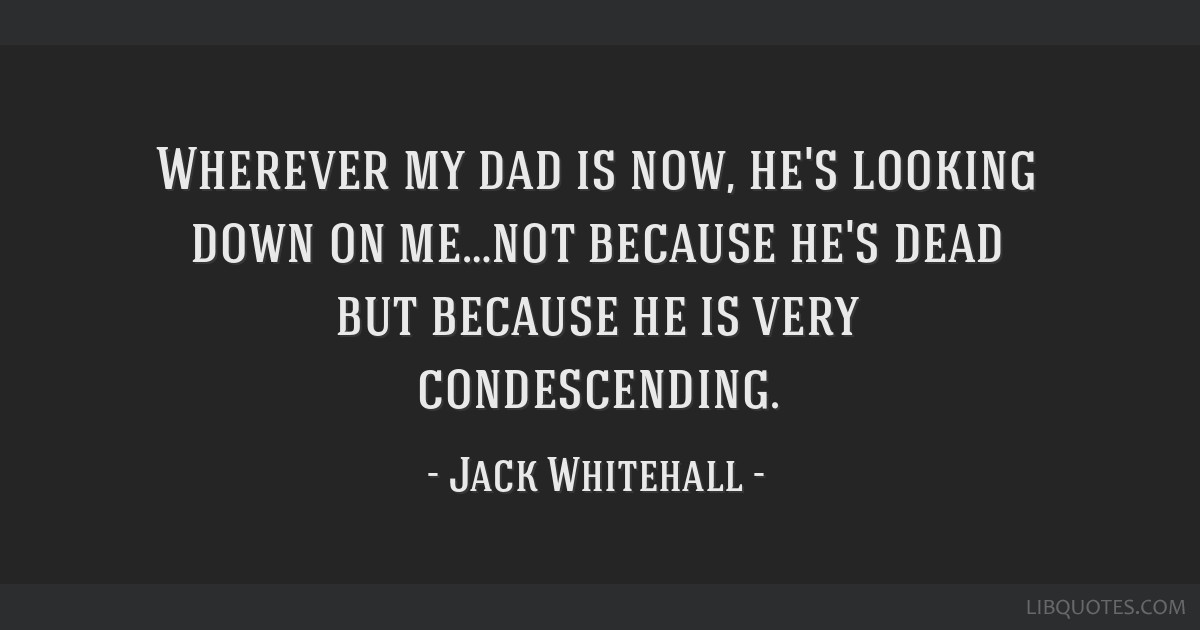
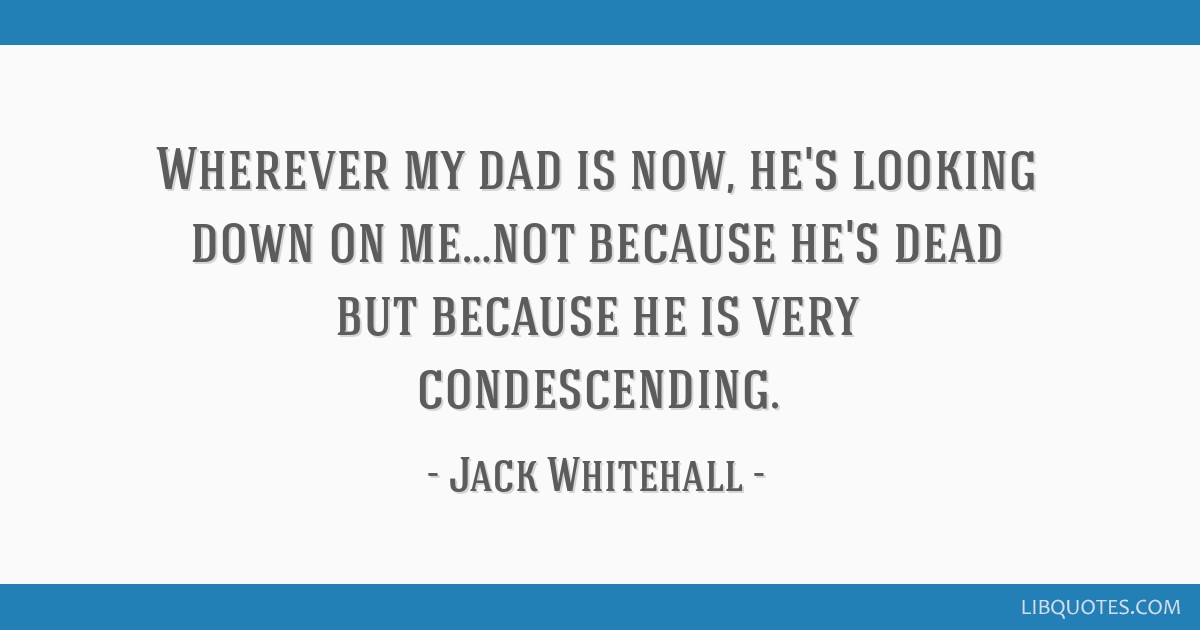
Few comedians balance wit and introspection as deftly as Jack Whitehall. Known for his sharp delivery and self-deprecating humor, he once delivered a line that resonated far beyond the stage: "I'm sure wherever my dad is, he's looking down on us. He's not dead—just very, very distant."
This quote—often shared as a "quote of the day" moment—packs more than just a laugh. It’s a layered commentary on family dynamics, truth-telling, and the absurdity of modern work and social performance. On the surface, it’s a joke about his famously strained but affectionate relationship with his father, Michael Whitehall. But beneath the punchline lies a quiet masterclass in honesty, workplace authenticity, and the human tendency to mythologize presence—emotional or physical.
Let’s dissect why this line sticks, what it reveals about modern values, and how its humor doubles as life advice.
The Humor That Masks a Hard Truth
Comedy often works best when it exposes uncomfortable realities under the guise of absurdity. Whitehall’s quote does exactly that.
“I’m sure wherever my dad is, he’s looking down on us” — a familiar phrase usually reserved for someone who has passed away — is twisted instantly with “He’s not dead—just very, very distant.”
The subversion is brilliant. It flips a sentimental cliché into a critique of emotional absence. Michael Whitehall, a veteran talent manager and frequent on-screen partner to Jack, is very much alive. Yet the joke suggests his emotional or physical distance makes him functionally absent.
This kind of humor speaks to a universal experience: being surrounded by people who are present but not there.
Real-world example: Think of the colleague who attends every meeting but never engages. Or the family member who shows up to holidays but spends the whole time on their phone. Their bodies are present, but their attention is elsewhere—“very, very distant.”
Whitehall’s line isn’t just funny. It’s diagnostic.
Honesty as a Professional Superpower
In an era where authenticity is both craved and faked, Whitehall’s comedy stands out because it feels true. His quote works because it’s rooted in honesty—a trait increasingly rare in entertainment and corporate culture alike.
Consider how many public figures craft polished personas. Celebrities share “relatable” moments that are clearly staged. Executives preach transparency while avoiding tough answers. Yet Jack Whitehall regularly mocks his own privilege, insecurities, and flawed relationships—on stage and on camera.
That raw honesty builds trust. And trust, in both comedy and business, is currency.
Why honesty wins: - Audiences can spot inauthenticity instantly. - Teams perform better when leaders admit uncertainty. - Brands gain loyalty when they acknowledge missteps.
Whitehall’s joke about his dad isn’t just a personal dig—it’s a public admission of a complicated relationship. That vulnerability makes him more relatable, not less.
Common mistake: Many professionals believe that showing weakness damages credibility. In reality, selective vulnerability—like Whitehall’s comedic self-awareness—enhances it.
Work Culture and the Myth of Constant Presence
Whitehall’s dynamic with his father has played out publicly in travel documentaries like Jack Whitehall: Travels with My Father. What starts as a mismatched buddy adventure evolves into something deeper: a study in generational differences in work ethic and emotional expression.
Michael Whitehall represents a classic British archetype—the stiff-upper-lip professional. Emotion is suppressed. Work is duty. Affection is implied, never stated.
Jack, on the other hand, is expressive, anxious, and emotionally literate. Their clashes aren’t just comic—they’re cultural.
This tension mirrors modern workplace struggles: - Older leadership values endurance over expression. - Younger employees prioritize psychological safety and feedback. - The “always-on” work culture creates physical presence without meaningful engagement.
Use case: A manager clocks in early and stays late, signaling dedication. But if they’re disengaged during meetings, avoid tough conversations, and never mentor junior staff, their presence is performative—not productive.
Whitehall’s joke about his dad “looking down on us” while being “very distant” captures this perfectly. Just because someone is around doesn’t mean they’re contributing.
Workflow tip: Evaluate team presence not by hours logged, but by quality of interaction. Are people listening? Are they emotionally available? Are they present in a way that adds value?
Human Nature and the Stories We Tell
We tell stories to make sense of absence.
When someone dies, we say they’re “watching over us.” When a parent is emotionally unavailable, we might say they “care in their own way.” These narratives help us cope—but they can also let people off the hook.
Jack Whitehall’s quote exposes that mechanism. By applying a eulogy-style phrase to a living, distant father, he highlights how we romanticize roles—father, boss, mentor—regardless of actual behavior.
Psychological insight: Humans are wired to assign meaning to gaps. Silence becomes wisdom. Distance becomes dignity. But sometimes, absence is just absence.
The genius of Whitehall’s line is that it acknowledges the myth while puncturing it. He uses the language of reverence (“looking down on us”) to underscore neglect (“he’s not dead—just very distant”).
It’s a reminder: Don’t confuse role with relationship. Don’t confuse presence with participation. Don’t confuse performance with care.
Comedy as a Mirror to Culture
Great comedians don’t just entertain—they diagnose.
Whitehall’s humor about his father reflects broader cultural shifts: - From stoicism to emotional openness. - From hierarchical respect to earned authority. - From silent endurance to vocal well-being.
His quote isn’t just about family. It’s about how we relate to power, legacy, and expectation.
Example in media: Compare Whitehall’s dynamic with his father to classic TV duos like The Cosby Show or Family Ties. Those shows portrayed father figures as wise, central, and emotionally accessible (if flawed). Today’s comedies—Derry Girls, Ted Lasso, After Life—often feature absent, confused, or emotionally stunted fathers.
Whitehall’s work fits this trend. He doesn’t just make jokes—he documents a cultural renegotiation of what it means to be a man, a son, a leader.
Applying Whitehall’s Lessons Beyond Comedy
You don’t need to be a comedian to use Whitehall’s insights. Here’s how to apply them in real life:
#### 1. Audit Your Own Presence Are you physically present but mentally checked out? In meetings, conversations, family time? Ask: If someone described me using Whitehall’s quote, would it fit?
#### 2. Reward Real Contribution, Not Just Visibility In teams, stop equating long hours with commitment. Focus on outcomes, collaboration, and emotional availability.
#### 3. Tell the Truth—Even When It’s Awkward Like Whitehall, use humor or directness to name what’s unspoken. “We keep saying my manager supports us, but he’s never available. He’s not dead—just very distant.”
#### 4. Reevaluate Family and Work Narratives Are you excusing someone’s absence because of their title—“dad,” “boss,” “founder”? Challenge that. Roles don’t guarantee connection.
#### 5. Use Humor to Navigate Tension Whitehall could’ve made a bitter comment about his dad. Instead, he crafted a joke that invites laughter and reflection. Humor disarms—use it wisely.
Why This Quote Endures
“Quote of the day” moments come and go. But Whitehall’s line sticks because it’s multi-layered: - It’s funny. - It’s personal. - It’s cultural. - It’s honest.
It works in a stand-up routine, in a team workshop, in a therapy session, or over dinner with family. That versatility is rare.
More importantly, it reflects a growing demand for authenticity—in entertainment, leadership, and human connection. We’re tired of empty gestures. We want presence that’s real, not just performed.
Jack Whitehall doesn’t solve his relationship with his dad in one joke. But he names the problem. And sometimes, that’s the first step toward change.
Actionable closing: Next time you hear someone say, “They’re just busy,” or “That’s just how they are,” pause. Ask: Is this person present—or just physically here? Then, check yourself: Are you showing up in a way that matters?
Use Whitehall’s quote not as a punchline—but as a prompt.
FAQ
What is Jack Whitehall’s most famous quote? While not always attributed formally, the line “I’m sure wherever my dad is, he’s looking down on us. He’s not dead—just very, very distant” is one of his most shared and relatable quotes, blending family humor with emotional insight.
Is Jack Whitehall close to his dad? Yes—despite the comedic portrayal of distance, Jack and Michael Whitehall have grown closer through their collaborative projects, using humor to navigate their complex relationship.
What do Jack Whitehall’s quotes say about British culture? They highlight British tendencies toward emotional restraint, class awareness, and dry humor, often using irony to address serious topics like family and masculinity.
How does Jack Whitehall use humor to discuss honesty? He wraps uncomfortable truths in jokes, making them more digestible. His comedy often reveals personal insecurities, family tensions, and societal expectations with self-awareness.
Can humor improve workplace culture? Absolutely. When used appropriately, humor—especially self-deprecating or observational—can break down hierarchies, reduce tension, and encourage honest communication.
What can we learn from Jack Whitehall’s approach to relationships? That honesty, even when awkward, builds deeper connections. Avoiding hard truths for comfort only prolongs distance—emotional or otherwise.
How does this quote apply to leadership? It’s a warning against performative presence. Leaders must be emotionally and mentally available, not just physically visible. True leadership is engagement, not attendance.
FAQ
What should you look for in Jack Whitehall’s Quote of the Day on Legacy and Truth? Focus on relevance, practical value, and how well the solution matches real user intent.
Is Jack Whitehall’s Quote of the Day on Legacy and Truth suitable for beginners? That depends on the workflow, but a clear step-by-step approach usually makes it easier to start.
How do you compare options around Jack Whitehall’s Quote of the Day on Legacy and Truth? Compare features, trust signals, limitations, pricing, and ease of implementation.
What mistakes should you avoid? Avoid generic choices, weak validation, and decisions based only on marketing claims.
What is the next best step? Shortlist the most relevant options, validate them quickly, and refine from real-world results.